The sub companies feature allows administrators to manage multiple brands or business entities under a single parent company.
Each sub company operates independently - with its own users, templates, groups, and branding - but can be managed centrally from the parent company’s dashboard.
Example structure:
Parent Company: Agency X
Subcompanies: Acme Co. Ltd, Vista Landscaping, ABC Media
Franchise groups or multi-location businesses needing separate branding and user management for each branch.
Holding companies overseeing multiple subsidiaries or business units.
Large organizations that want to maintain consistent management while keeping departments independent.
Resellers, Agencies & Partners managing several client brands under one account. For information about full white label solution, see the bottom of this guide.
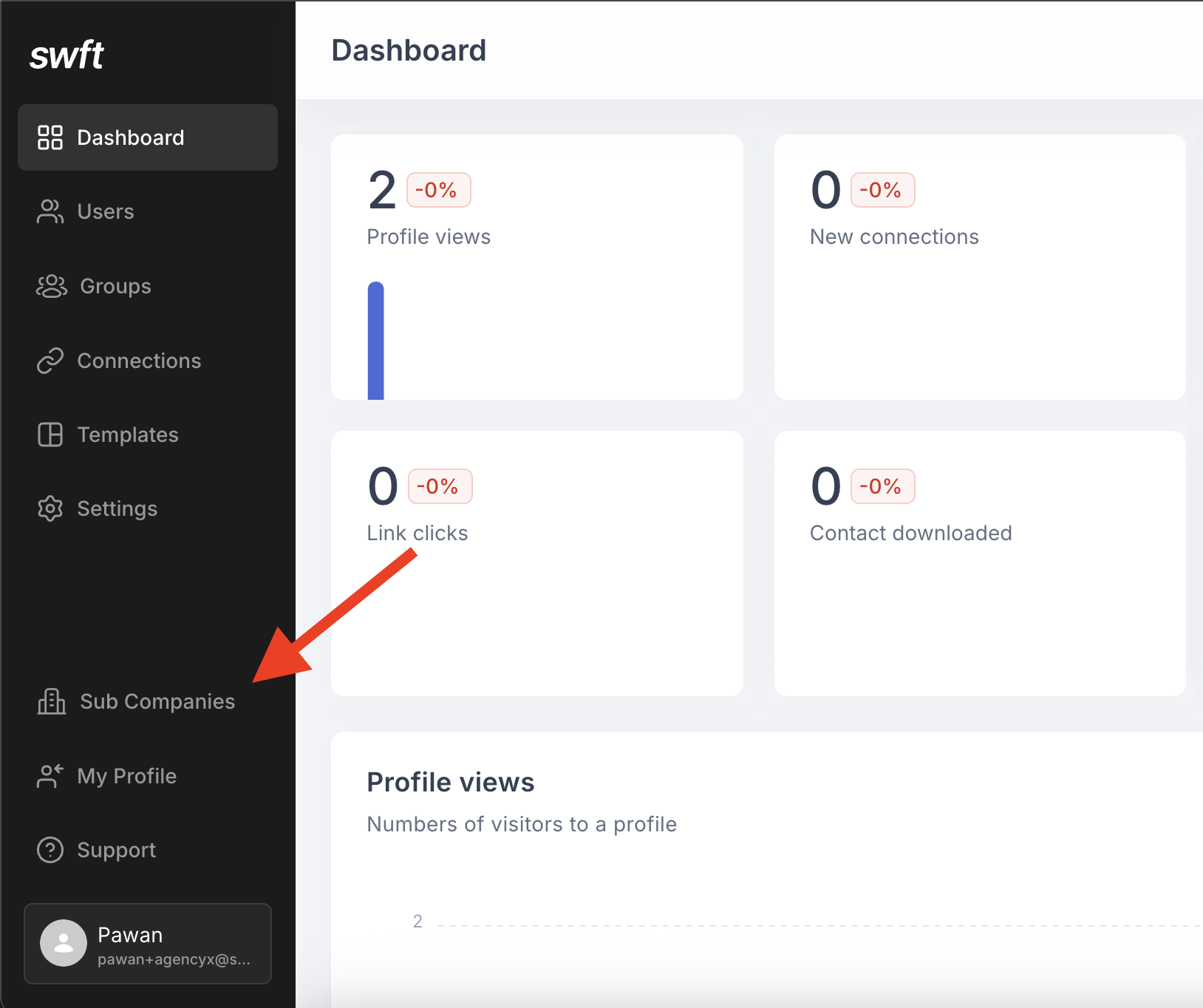
Go to your parent company admin dashboard: Admin Dashboard. Then open sub companies from the left-hand menu to view and manage all brands under your parent company.

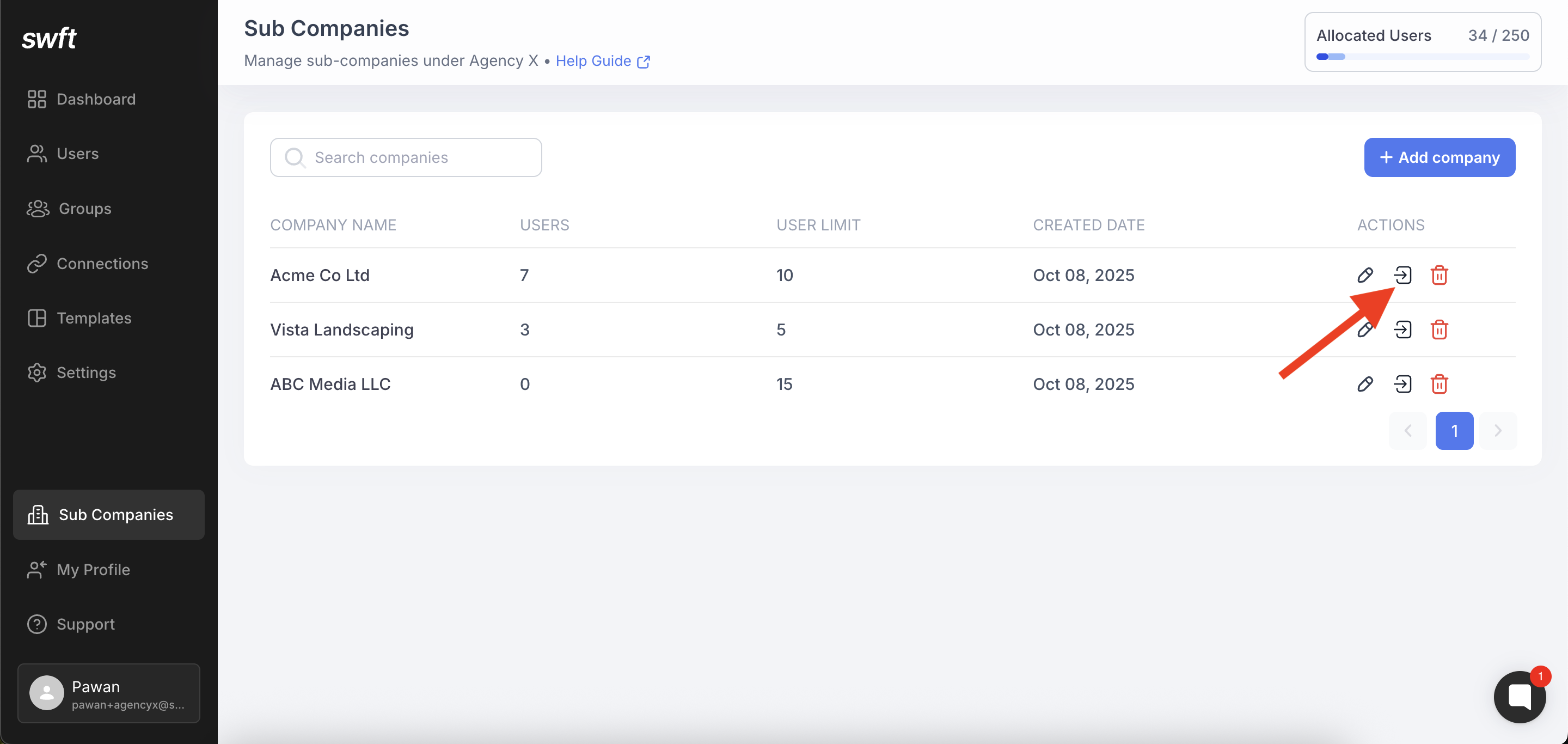
Here you’ll be able to manage all of your sub companies. After a subcompany is created, find it in the table and click Access to switch into that company’s dashboard.
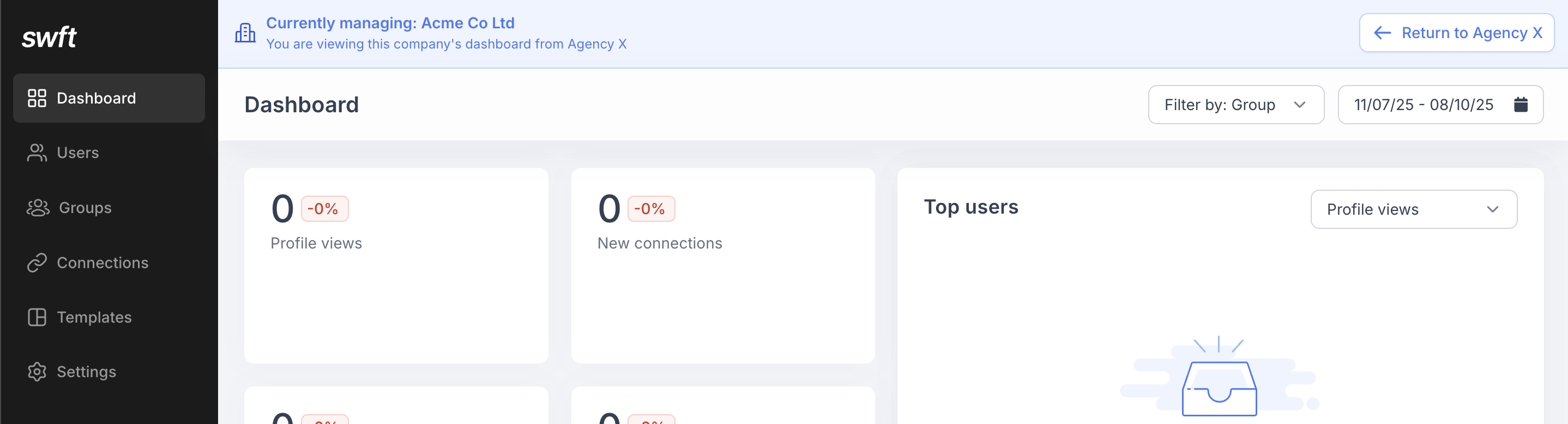
You’ll see a banner at the top confirming the context (e.g., “Currently managing: Acme Co Ltd”), which means you are now working inside that brand’s environment rather than the parent company.
Once inside a subcompany, configure it exactly like a standalone company: add users, create templates and groups, configure your custom domain, and set branding and digital wallet pass settings. All of these items are independent to that subcompany and won’t affect the parent or other subcompanies.
Admins within a sub company will have no access to the other sub companies or the parent company dashboard. Only admins within the parent company can manage the other sub companies.
When you’re finished, click Return to [Parent Company Name] in the top right to go back to the parent company’s dashboard.
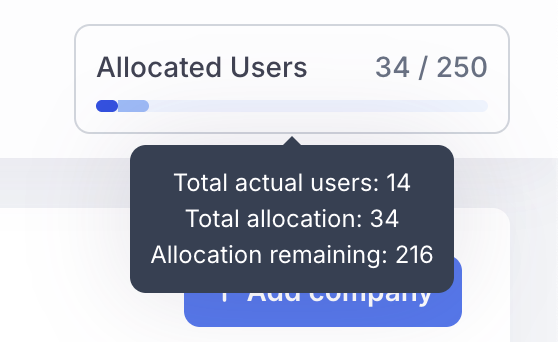
Your total license usage combines the number of users in the parent company plus the user limits assigned to each subcompany. For example, if your plan includes 250 licenses and the parent company has 4 users while your subcompanies are set to 10, 5, and 15 users respectively, you have allocated 34 of 250 licenses (4 + 10 + 5 + 15).
There is no limit to the number of sub companies you can create. You are only limited by the total user allocation across all sub companies.